In this article
A corporate golf day in the UK starts at about GBP 54 to GBP 55 a player at resort and members’ venues, before you add catering, prizes and hospitality. That is the base rate. What separates a break-even day from a profitable one is everything you build on top of it.
The entry pricing is indicative, drawn from published rates such as Macdonald Hotels from GBP 54 a player and Burford Golf Club society and corporate days from GBP 55. It is not a market size, and no consolidated figure exists for the UK corporate golf-day market. That gap is worth naming, because it is where operators lose pricing confidence.
The anatomy of a corporate day
Every corporate day is assembled from the same components. The difference between venues is how deliberately each one is priced.
| Component | What it covers | Pricing logic |
|---|---|---|
| Green fees | The golf itself, usually 18 holes | The base rate; discounted into the package, never itemised cheap |
| Format and competition | Shotgun or two-tee start, scoring, on-course games | Sold as experience design, not admin |
| Catering | Arrival coffee, halfway house, dinner | The margin engine; confirmed numbers 72 hours out |
| Branding and hospitality | Signage, gifts, prize table, photography | The sponsor-facing layer; priced per named inclusion |
| The follow-up | Photos, results, rebooking offer | Free to deliver, and where next year’s booking is won |
Shotgun or two-tee: the format decision
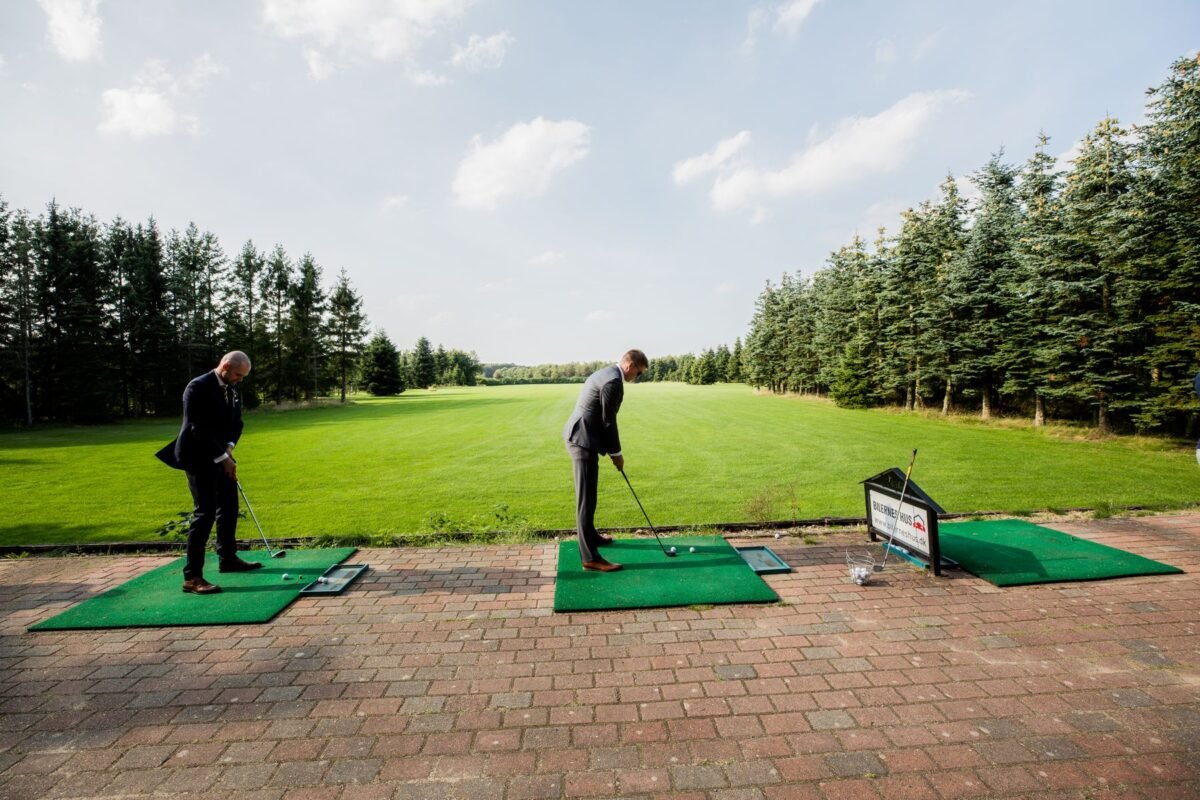
A shotgun start puts every group on the course at once, which compresses the day, guarantees everyone finishes together for dinner, and blocks the whole tee sheet. A two-tee start keeps part of the sheet open for other play but stretches the day. The commercial rule: a shotgun day should be priced as exclusive hire of the venue’s peak asset, because that is what it is.
What the buyer is actually buying
Companies book golf days for a measurable client or team occasion, and the demand is established: operators such as JdV Sport have run this market since 2009 and state they have worked with FTSE 100 clients. The buyer’s real product is conversation time. Four hours beside a client is the sale; the golf is the venue for it. Venues that understand this sell the day’s outcomes, not its logistics.
Pricing the day with confidence
Set a floor price you will not cross, and quote packages rather than rounds. A package with named inclusions moves the negotiation from the per-head rate to the contents, which is ground the venue controls. For context on what the golf side is worth nationally, UK green fees run to about GBP 526 million a year on Sheffield Hallam University research for The R&A, and the corporate day is among the highest-yield formats a tee sheet can host.
The operator’s checklist
Block the day as a single yield unit, not scattered fees. Confirm catering numbers 72 hours out. Brief the pro shop on the group’s profile before arrival. Photograph the day properly. Follow up within a week with images and a rebooking offer, because a repeat corporate client costs nothing to acquire and books earlier each year.
Where corporate golf days sit in the venue’s mix
Corporate golf days are the yield end of group golf, not the volume end. The volume end is the society market, which runs on repeat bookings, price sensitivity and packed calendars; our piece on the golf society business covers that trade. The corporate day borrows the society’s logistics and none of its pricing. Same shotgun start, same halfway house, entirely different buyer.
That distinction matters because venues that price the two markets identically give away the difference. A society organiser is spending members’ pooled money and hunts value. A company is spending a marketing budget and hunts certainty, presentation and outcomes. The product looks similar on the tee sheet. It is not similar on the invoice, and it should not be.
The sponsor layer: selling the same day twice
The most under-used revenue on corporate golf days is the layer sold to brands rather than to the host company. Hole branding, the prize table, arrival gifts, the drinks buggy and the photography package can each carry a named price, and each is bought by a budget that is not the green-fee budget.
The commercial reasoning is straightforward. The host buys the occasion. Sponsors buy the audience the host assembles. A venue that builds a simple sponsor menu, priced per inclusion, lets the organiser offset their own cost while the venue keeps its rate card intact. Nobody discounts, everybody wins, and the day’s revenue stops depending on one signature.
Common pricing mistakes on corporate golf days
Most failed corporate days fail commercially, not operationally. The patterns repeat.
- Quoting a per-head rate first, which anchors the negotiation on the one number the venue least controls.
- Discounting the golf instead of removing inclusions. A package should shrink before it cheapens.
- Treating catering as an add-on rather than the margin engine, then wondering where the profit went.
- Leaving the follow-up to chance. The photographs, results and rebooking offer are the cheapest sales assets the venue owns.
- Selling a shotgun start without pricing the exclusivity. Blocking the whole sheet is venue hire, and venue hire has a rate.
Each mistake traces back to the same root: pricing the components instead of the occasion. The fix is a package architecture with a floor price, named inclusions and a sponsor menu on top.
Frequently asked questions
How much does a corporate golf day cost in the UK?
From about GBP 54 to GBP 55 a player at resort and members’ venues, before catering, prizes and hospitality. Pricing is indicative and varies by venue and package.
Is there a UK market size for corporate golf?
No consolidated figure exists. The nearest hard data is the Sheffield Hallam consumer-spend breakdown, which puts UK green fees at GBP 526 million on 2019 data.
What format works best for a corporate golf day?
A shotgun start suits days built around a shared dinner and awards, because every group finishes together. A two-tee start suits venues that need to keep part of the tee sheet open. Price a shotgun day as exclusive use.
How far ahead should a venue confirm catering numbers?
Confirm final numbers about 72 hours before the day. Catering is the margin engine of a corporate day, and late guesses erode it fastest.
When should a venue host corporate golf days?
Midweek slots suit most venues because they protect the weekend peak for members and regular visitor play. A shotgun start blocks the whole course, so schedule it where displaced golfers cost least and price it as exclusive use.
What is easiest to negotiate on corporate golf days?
Dates, format and added value. Venues protect headline rates but will move on shoulder-season dates, catering structure, drinks packages and extras such as range balls or gifts. Ask for value additions before discounts, and expect the best terms midweek outside the peak months.
How far ahead should you book a corporate golf day?
As early as the objective allows. Prime summer dates at popular venues go first, and early bookers get the best choice of format and the most negotiating room. Late bookings can still work in the shoulder season, when venues would rather fill gaps than protect rates.
Sources: Macdonald Hotels and Burford Golf Club published rates (accessed July 2026); JdV Sport; Sheffield Hallam University for The R&A (2019 green-fee data). Pricing is indicative, not a market size.
The golf business edit, weekly.
Nine sharp reads for operators, sponsors and serious readers. No noise, no filler.